A lot of companies have this stack:
Web analytics tool.
Mobile analytics tool.
Web session replay.
Crash reporting.
React Native error monitoring.
Deployment system.
Internal logging.
BI.
Maybe three dashboards nobody remembers buying.
Each tool individually makes sense.
Collectively, you've accidentally created a scavenger hunt.
Users don't care about your platform boundaries#
Suppose somebody starts on the web.
Creates an account.
Later opens the mobile app.
Completes onboarding.
Hits an error.
From the user's perspective, that was one interaction with one company.
From the engineering perspective, the data may live in several completely unrelated systems.
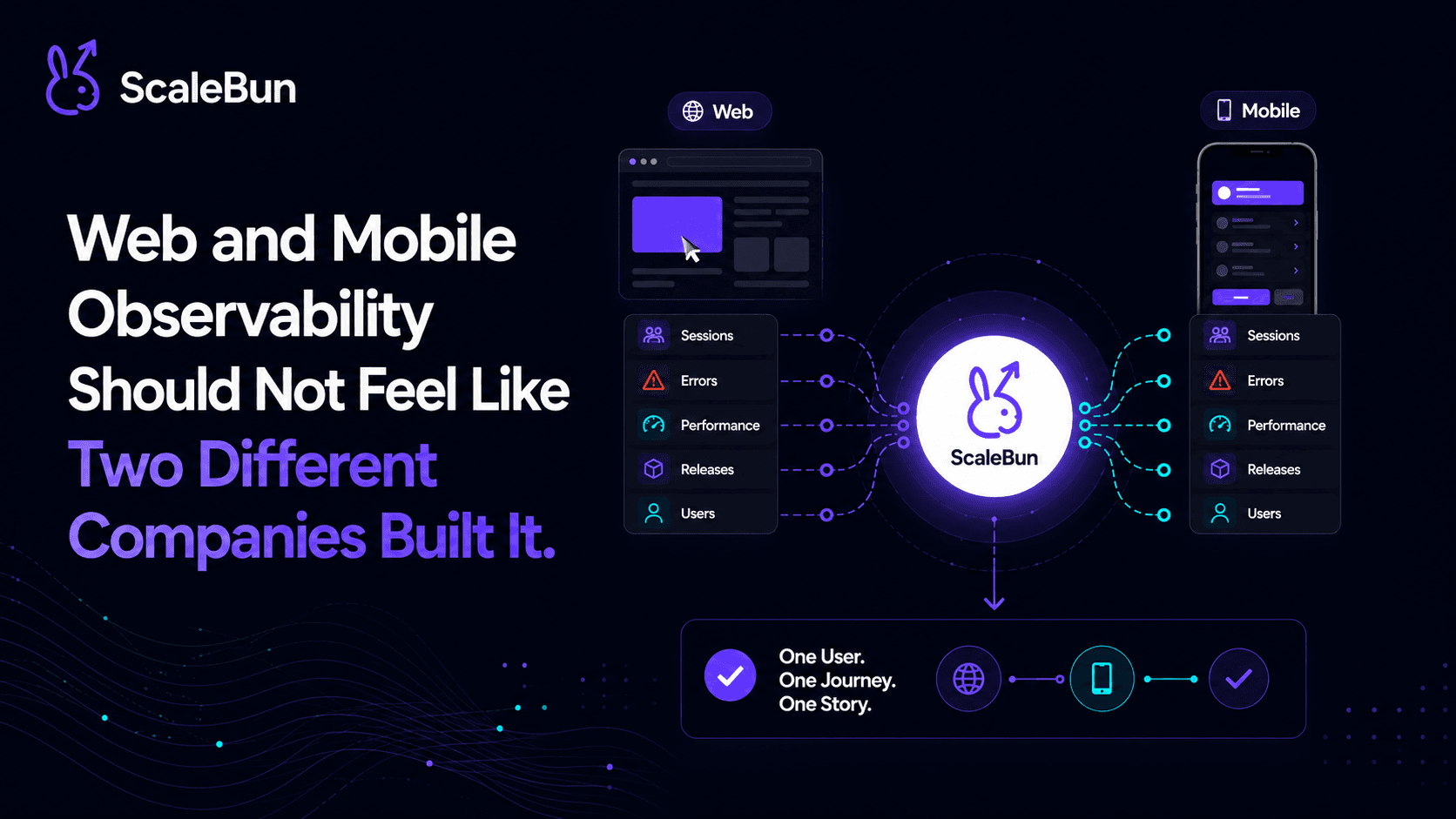
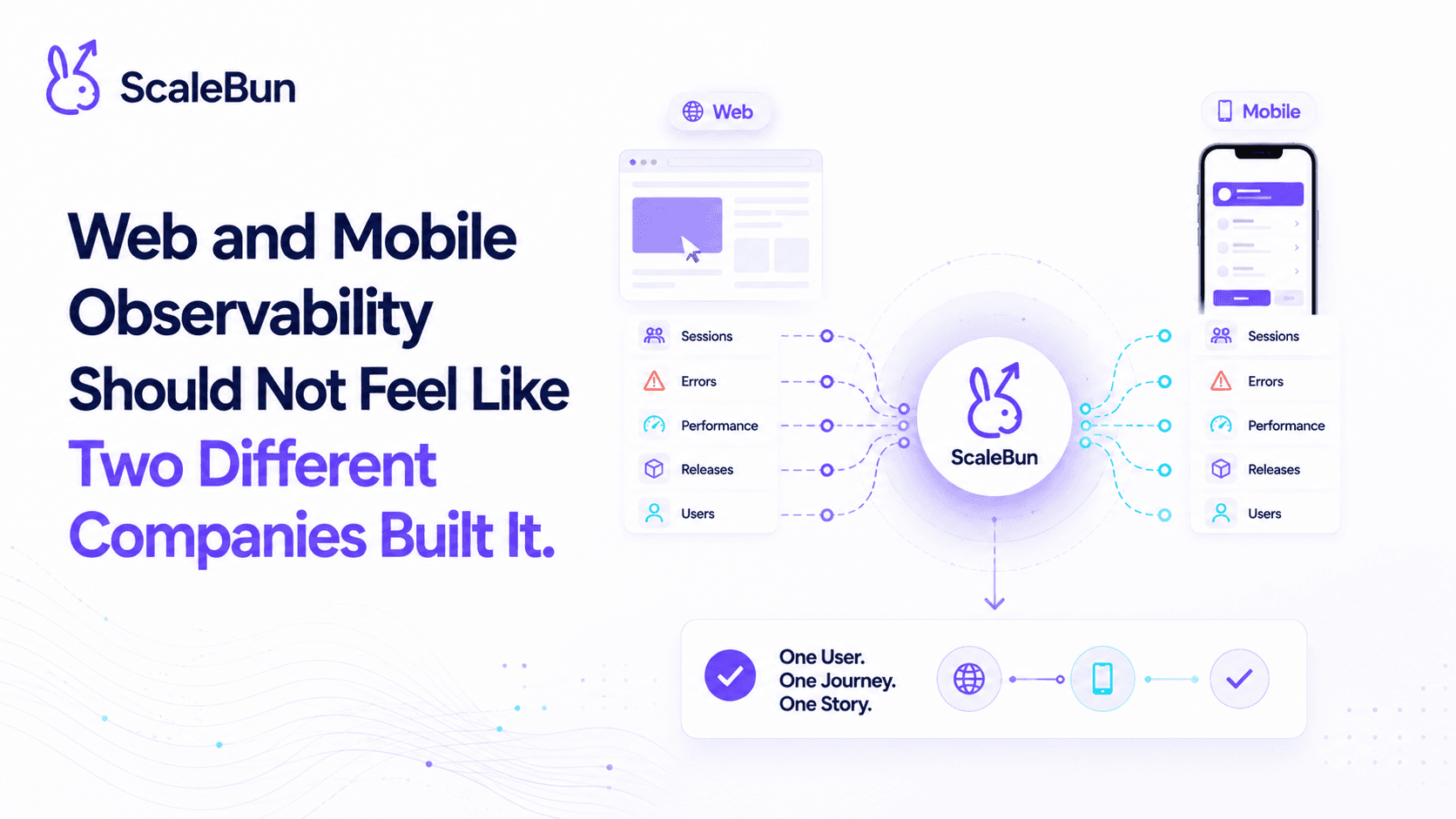
ScaleBun supports both Web and React Native SDKs, which creates an opportunity to normalize observability across the two environments.
The implementation details are obviously different.
Web browsers and React Native applications are very different beasts.
But the questions engineers ask are remarkably similar:
What happened?
Who experienced it?
What were they running?
What changed?
Did something fail?
Can I reproduce it?
Consistency also improves engineering velocity#
Teams shouldn't have to relearn an entirely different debugging workflow depending on whether the bug happened in Chrome or React Native.
A shared conceptual model reduces operational complexity.
Sessions look like sessions.
Errors look like errors.
Users look like users.
Releases look like releases.
The plumbing underneath can be wildly different.
That's the platform's problem.
Not the engineer's.
Good developer infrastructure hides complexity without hiding reality.
There's a difference.
An exception occurs.
Your monitoring platform knows:
device: iPhoneOS: 26.2app version: 5.1.3Useful.
Support says:
“This keeps happening to customer Sarah.”
Now what?
The missing link between technical telemetry and actual users is surprisingly expensive.
Anonymous telemetry only gets you so far#
If a platform understands user identity and session context, engineers can investigate a customer problem directly.
Not:
“Can Sarah reproduce the issue again?”
But:
“Show me Sarah's affected sessions.”
This dramatically changes support escalation.
Support teams can provide an actual user identifier.
Engineering can inspect behavior.
No 17-message Slack thread required.
ScaleBun associates user and session context so production issues can be investigated at the level they actually occur: to a person, during a specific session, in a particular environment.
It also reveals whether bugs are really random#
Sometimes a bug appears intermittent.
Then you segment affected users and discover:
Every affected customer:
uses the same device family,
belongs to the same account type,
runs the same application release,
or entered through the same flow.
Randomness often means:
“We haven't found the variable yet.”
Context helps find the variable.
One observability model for web and mobile
See how ScaleBun applies the same debugging model across web and React Native.
See connected monitoring→